
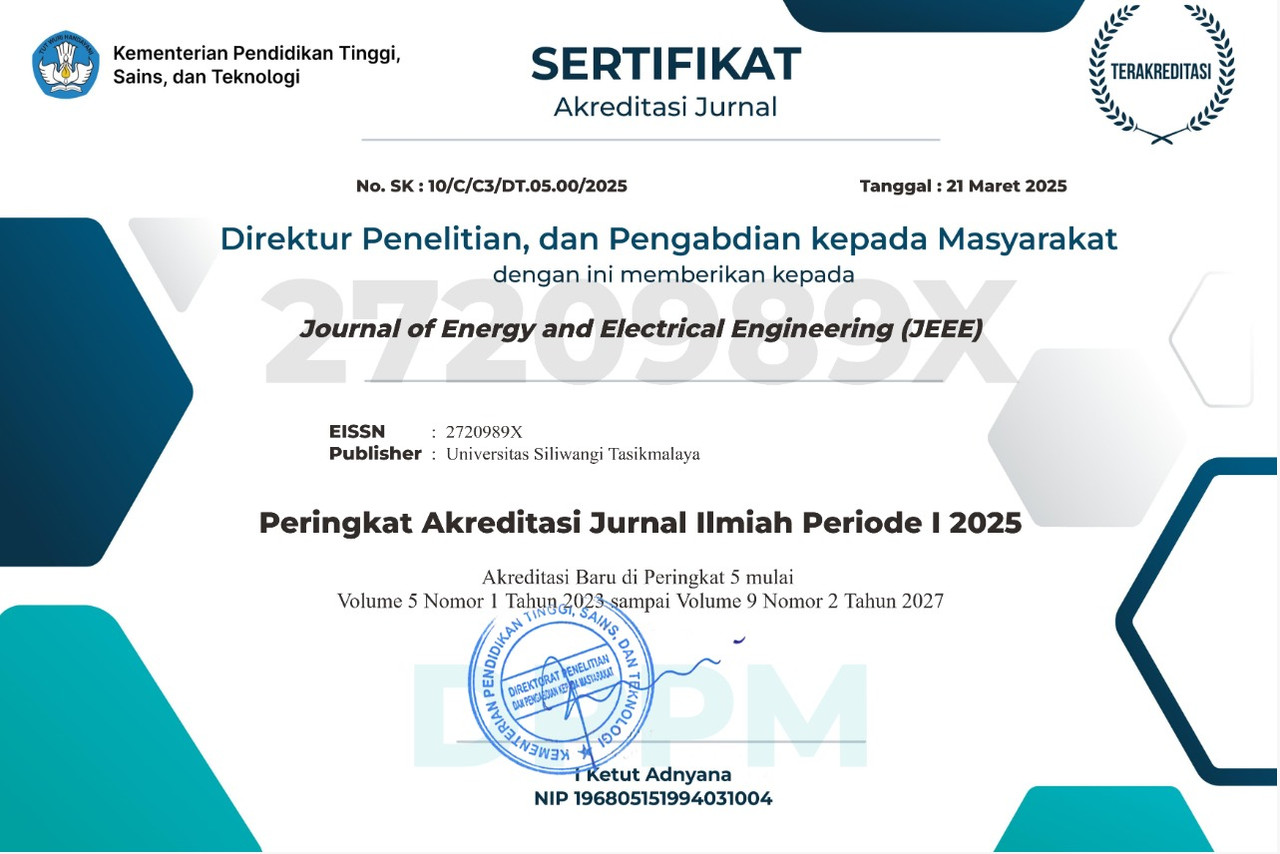










The Journal of Energy and Electrical Engineering (JEEE) is committed to maintaining the credibility, accuracy, and integrity of scholarly publications in energy and electrical engineering. JEEE takes allegations of research and publication misconduct seriously and handles them fairly, objectively, and with appropriate confidentiality. This policy applies to manuscripts under editorial consideration and articles already published in JEEE. Its procedures are informed by guidance from the Committee on Publication Ethics (COPE) and the International Committee of Medical Journal Editors (ICMJE).
1. SCOPE AND DEFINITION OF RESEARCH MISCONDUCT
Research misconduct refers to serious departures from accepted standards of research integrity or ethical scholarly publication. Concerns that JEEE may assess include, but are not limited to:
- Fabrication: inventing research data, experimental measurements, survey responses, simulation outputs, or results that were not actually obtained.
- Falsification: inappropriately altering research procedures, instrument readings, datasets, graphs, figures, or analytical results so that the research is misrepresented.
- Plagiarism: using another person's words, ideas, methods, figures, software, or research findings without appropriate attribution.
- Duplicate or redundant publication: submitting or publishing substantially overlapping research without proper disclosure or justification.
- Inappropriate data or image manipulation: misleading alteration or selective presentation of measurements, waveforms, experimental images, or simulation results that distorts the scientific evidence.
- Authorship misrepresentation: including ineligible authors, omitting qualifying contributors, or using author names without appropriate consent.
- Peer-review manipulation: using false reviewer identities, fabricated review reports, or other measures intended to compromise independent editorial assessment.
- Serious nondisclosure: deliberately concealing relevant conflicts of interest or material research support when the omission compromises research or publication integrity.
An allegation is not proof of misconduct. Honest error, scientific disagreement, and methodological limitations must be distinguished from intentional deception or serious breaches of research integrity. Each case will be evaluated on its own evidence and circumstances.
2. REPORTING AN ALLEGATION
Authors, reviewers, readers, research institutions, and other interested parties may report concerns about a manuscript or a published article to the JEEE Editorial Office. A report should contain, where available:
- The article title, authors, manuscript identifier, and DOI or URL (if published).
- A clear explanation of the suspected problem and the affected material.
- Verifiable supporting evidence, such as relevant citations, figures, data comparisons, or documentation.
- The reporter's name and contact information, if the reporter is willing to provide them.
Editorial Office – Journal of Energy and Electrical Engineering (JEEE)
Email: [email protected]
Reports submitted in good faith will be considered without prejudging the individuals involved. Anonymous reports may be evaluated when they provide sufficient specific and verifiable evidence. JEEE cannot guarantee the outcome of a case or absolute anonymity where disclosure is required by law or a competent investigation.
3. PROCEDURE FOR HANDLING ALLEGATIONS
The Editor-in-Chief or a designated editor will coordinate the preliminary editorial assessment. The process ordinarily includes the following stages:
- Initial assessment: The editor examines whether the concern falls within the journal's responsibility and whether enough information is available to assess it. Additional evidence may be requested.
- Preliminary examination: The editor may review the manuscript, published article, references, similarity reports, figures, underlying research data, analysis code, or other relevant materials. Independent expert advice may be sought where necessary.
- Author clarification: The authors will normally be contacted with a factual description of the concerns and given an appropriate opportunity to respond and provide explanations or supporting documentation. The journal will avoid making premature accusations.
- Further assessment or institutional referral: Where serious concerns cannot be adequately resolved through editorial checks, JEEE may contact the relevant institution, research integrity office, funder, or other competent authority and request an investigation.
- Editorial determination: The journal considers the available evidence and, when relevant, the outcome of an institutional investigation before deciding on an appropriate publication-related action.
- Documentation and follow-up: The journal records the editorial process and takes reasonable steps to notify relevant parties of outcomes that may appropriately be disclosed.
The duration of an assessment depends on the complexity of the concerns, the availability of evidence, and any external investigation. The journal will seek to address concerns without unnecessary delay.
4. RESPONSIBILITIES OF AUTHORS AND REVIEWERS
Authors are expected to cooperate with reasonable requests for clarification and to provide supporting information needed to assess the reliability of the reported work, subject to applicable confidentiality, privacy, intellectual property, and legal requirements. Where relevant, such information may include original measurement records, appropriately documented datasets, experimental protocols, simulation settings, analytical procedures, and methodological explanations.
Reviewers and editors who identify possible misconduct must communicate their concerns through the journal's confidential editorial channels, provide supporting reasons, and avoid public accusations before an appropriate assessment. Unpublished manuscripts and confidential materials must not be disclosed or used for personal advantage.
5. COOPERATION WITH RESEARCH INSTITUTIONS
JEEE distinguishes the journal's responsibility for the integrity of the scholarly record from the responsibility of research institutions and competent bodies for conducting formal investigations into the conduct of researchers. When appropriate, JEEE may forward documented concerns to the relevant institution, cooperate with its investigation, and consider the findings in determining editorial action. The journal does not impose institutional disciplinary sanctions.
6. POSSIBLE EDITORIAL ACTIONS
Depending on the evidence and the publication status of the manuscript or article, JEEE may take one or more of the following actions:
- Close the case when a concern is unsupported or has been satisfactorily resolved.
- Request explanations, additional documentation, or appropriate revisions.
- Pause editorial consideration while a serious concern is being assessed.
- Reject a submitted manuscript when the findings justify that decision.
- Publish a correction when a published error requires amendment but the principal findings remain reliable.
- Publish an Expression of Concern when significant unresolved issues warrant alerting readers.
- Publish a retraction when the findings of a published article are unreliable or other grounds for retraction are established.
Actions involving published articles will be documented in accordance with the journal's Correction and Retraction Policy and applicable COPE guidance. Retraction is intended to protect the scientific record, not to serve as a punishment.
7. CONFIDENTIALITY, IMPARTIALITY, AND FAIR TREATMENT
JEEE will handle allegations with appropriate confidentiality and restrict access to sensitive information to persons with a legitimate role in assessing the matter. Individuals who are the subject of an allegation will ordinarily be provided a fair opportunity to respond. Editors or reviewers with relevant conflicts of interest must recuse themselves from the case, and an independent editor may be appointed. The journal will avoid unnecessary disclosure of personal information and will assess concerns on the evidence rather than on the identity of the complainant or respondent.
8. RELATIONSHIP TO OTHER JEEE POLICIES
This policy should be read together with JEEE's Publication Ethics, Plagiarism Check, and the journal's applicable policies on authorship, conflicts of interest, and correction or retraction. Where a concern also involves authorship or conflicts of interest, the relevant specific policy will inform the editorial assessment.
9. REFERENCES AND ETHICAL GUIDELINES
- Committee on Publication Ethics (COPE). Fabricated Data in a Submitted Manuscript (COPE Flowchart, 2023). COPE Flowchart.
- Committee on Publication Ethics (COPE). Cooperation between Research Institutions and Journals on Research Integrity Cases. COPE Guidance.
- International Committee of Medical Journal Editors (ICMJE). Scientific Misconduct, Expressions of Concern, and Retraction. ICMJE Recommendations.